

-1.webp)
What communication infrastructure services include
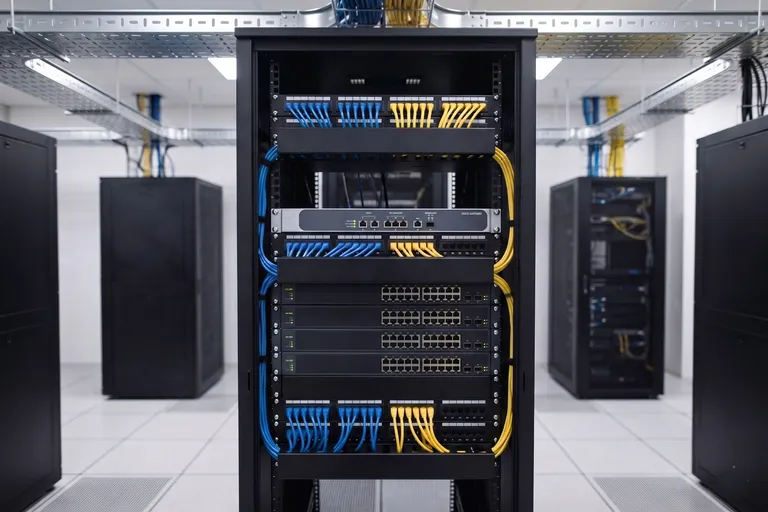
Communication infrastructure is the active layer that carries voice, video, and alerting across your network: the IP PBX, the video conferencing endpoints, the paging amplifiers, the intercom controllers, and the unified messaging platform that ties them together. A complete scope covers the design, the equipment selection, the QoS configuration on the underlying network, the installation, the commissioning, and the testing from the first site survey through to a documented handover that includes your dial plans, line groups, and as-built records.
IP telephony
On-premise or hosted IP PBX with desk phones, softphones, and SIP trunks sized for your call volume.
Video conferencing
Meeting room and personal endpoints, from huddle rooms to large boardrooms, with cloud bridge integration.
Paging and intercom
IP paging amplifiers and zone speakers for public address, with emergency override capability.
Intercom and door communication
IP intercoms linked to access control, with audio and video entry at reception and secure zones.
Unified messaging
Voicemail-to-email, hunt groups, auto-attendant, and presence integrated across phone and desktop.
QoS and network integration
Voice and video traffic segmented and prioritised on the network so call quality is not left to chance.
The dial plan, call routing logic, and QoS policy are agreed and documented before any equipment is ordered. Nothing is procured until the design is confirmed.
What goes wrong with enterprise communication infrastructure
Four failures that appear after the system goes live. Each one is a design or configuration decision, not bad luck, and each is preventable before a single phone is installed.
Technical specification
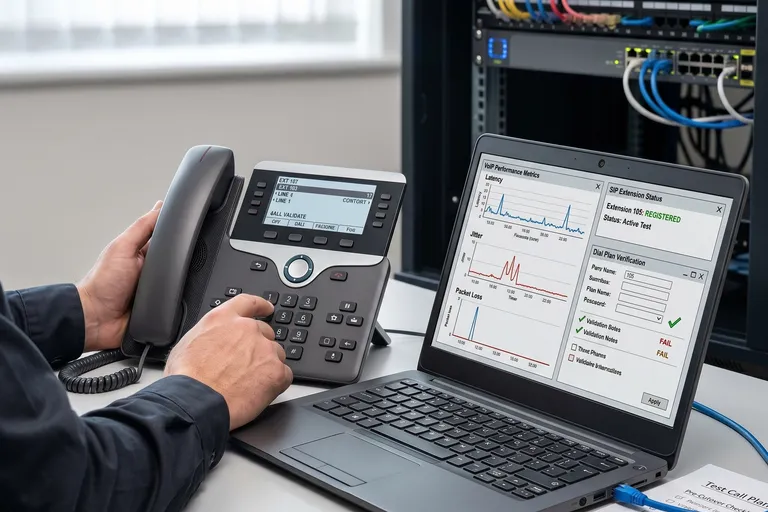
Your communication infrastructure is designed to recognised standards, not to a single vendor's default settings. Telephony follows ITU-T G.114 latency targets and SIP RFC 3261; video conferencing follows H.323 and SIP interoperability profiles; cabling is channel-tested to TIA-568-D (2018) and ISO/IEC 11801:2017. QoS is designed into the network before any endpoint is installed, and every system is commissioned, tested, and documented before handover.
What affects the cost of a communication infrastructure project
The cost of a communication project moves with the number of extensions and sites, the type and size of meeting rooms, paging zone count, whether an on-premise or hosted PBX model fits your requirements, and how much existing equipment can be reused. We publish the drivers, not a price, because a real figure comes from your design.


On-premise PBX, hosted PBX, or UCaaS: which model fits your business?
Your PBX model determines your upfront cost, your control over the dial plan, and your monthly run cost.
For most multi-site businesses, a hosted PBX gives you managed telephony without the capital cost of an on-premise server, at the cost of a monthly per-seat fee and a dependency on your internet link. If you need deep integration with IP paging, intercom, and a complex dial plan, an on-premise system gives you more control. If your users are already on Microsoft 365 or Workspace, a UCaaS platform may remove the need for a separate PBX entirely.
What else connects to your communication infrastructure
Your communication systems share the same network and cabling as your security and building systems. These connections belong in the design from the start.
Structured cabling
Every IP phone, speaker, and intercom runs on your structured cabling. The two are designed together so PoE, bandwidth, and category ratings match what the communication systems need.
View structured cablingNetwork infrastructure
Voice and video traffic must be QoS-segmented on the underlying network. Communication and network infrastructure are designed as one layer.
View network infrastructureAccess control and intercom
IP intercoms connect to access control readers and door controllers. Designing both systems together avoids wiring duplication and ensures the access control panel and the intercom controller share the right network segments.
View ELV systemsLife safety and fire alarm integration
Emergency paging override is triggered by the fire alarm panel. The paging design must account for the integration before installation.
View life safety servicesFrequently asked questions
The questions IT and facilities teams ask about communication infrastructure before going to tender.
When we are not the right choice
We will tell you directly when your project is not the right fit.
Your tender is scored on lowest price alone
We will not remove QoS design, call quality testing, or documentation to match a cheaper number. A proposal that leaves those out is a different scope, not a better deal.
You run one small office with a simple off-the-shelf phone system
For a handful of extensions and a consumer VoIP solution, your own IT team or a local reseller will deliver it faster and for less than we will.
You want a locked-in, single-vendor proprietary stack with no documentation
We design to open standards and hand over exported configurations and dial plans. If a closed system that only the original vendor can change is the goal, we are not the right fit.
You're a good fit if…
You are a good fit if your communication infrastructure spans multiple sites or multiple systems telephony, video conferencing, paging, and intercom on shared infrastructure, where call quality and availability matter, where the system needs to integrate with access control or fire alarm, and where a documented handover your team can run is non-negotiable.
A scope to test communication proposals against before you tender
A communication assessment gives you a dial plan outline, a QoS policy, and an indicative budget range for your site so procurement compares proposals that cover the same work.
Tell us about your project
Response within one business day. No obligation.
Related resources
ICT infrastructure services overview
How communication infrastructure fits the full ICT scope: structured cabling, network infrastructure, and enterprise computing.
View ICT servicesNetwork infrastructure
The network layer your voice and video traffic runs on, QoS-segmented and documented at handover.
View network infrastructure