
Structured Cabling · ICT Infrastructure

Structured cabling services designed to TIA-568-D (2018) and channel-certified at every outlet

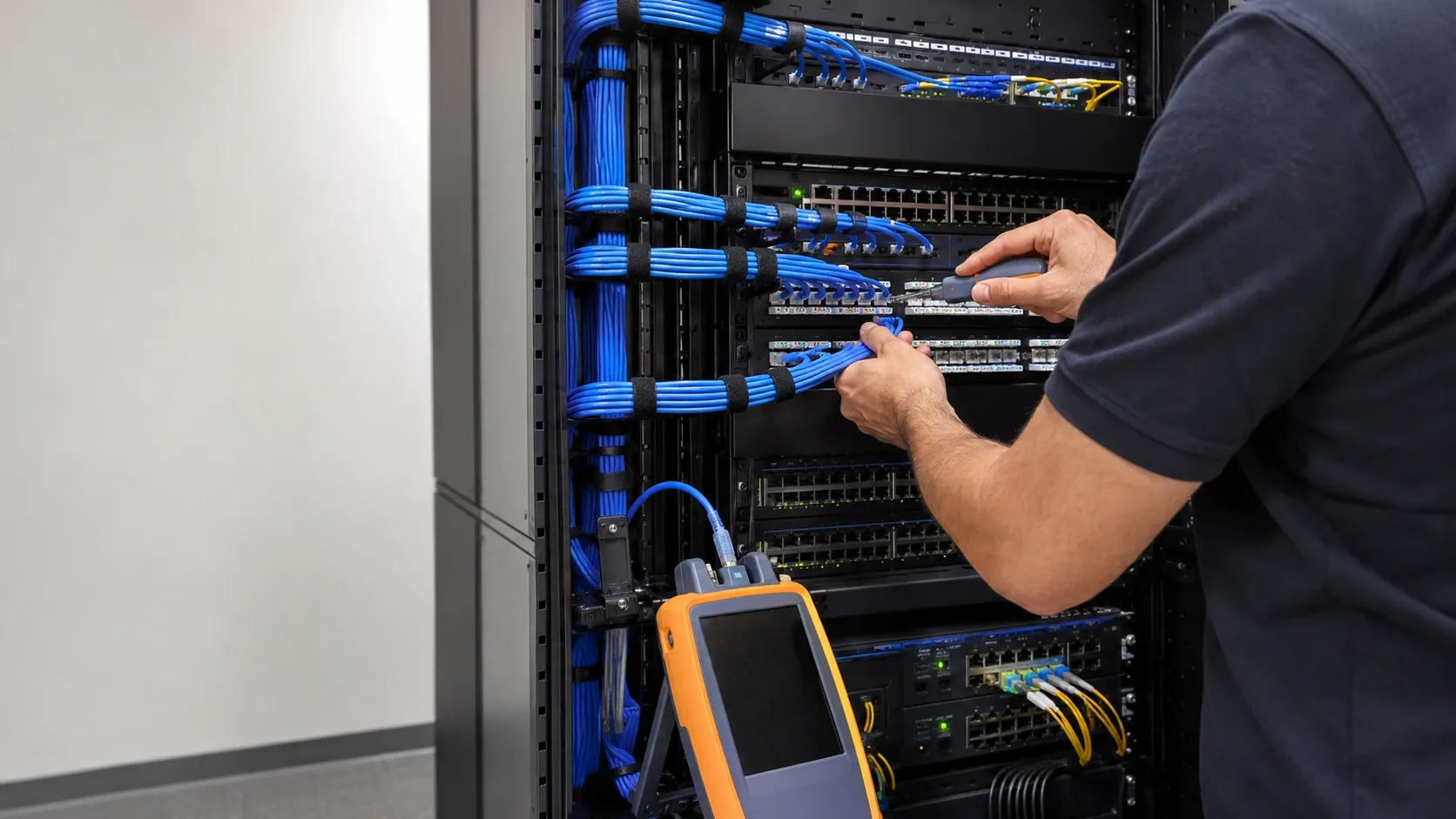
Structured cabling installation with Fluke DSX channel testing at a patch pane
100%
channels tested before handover

From cable schedule to certified handover one accountable scope.

If your project needs certifiable network cabling infrastructure, structured cabling services cover the complete physical layer from design through documented handover: cable category selection, containment routing, MDF and IDF layout, copper and fiber installation, Fluke DSX channel testing at every outlet, and editable as-built drawings as a named contract deliverable. Every installation is designed to TIA-568-D (2018) and ISO/IEC 11801:2017 (3rd edition), and every channel is tested before you sign the handover certificate.

TIA-568-D (2018)ISO/IEC 11801:2017Fluke DSX channel-tested
ICT infrastructure services overview
A certified cabling engineer replies within one business day not a sales rep.
What it is

What structured cabling services include

Structured cabling is the physical wiring infrastructure that connects your network equipment, workstations, IP cameras, access control readers, BMS controllers, and wireless access points to your network core. A complete infrastructure cabling scope covers copper horizontal cabling (CAT6 or CAT6A), fiber backbone runs, patch panels, containment, and all labeling and documentation from design through handover.

Labelled patch panels and structured cabling in an IDF rack

Site survey & design

Floor plans, MDF/IDF locations, and a full cable schedule.

Containment design

Trays, conduits, ladder racks, and fire-rated routes.

Copper & fiber cabling

CAT6, CAT6A, OM4 multimode, and OS2 single-mode.

Patch panels & terminations

MDF and IDF, labelled to the cable schedule.

Fluke DSX channel testing

Every outlet, every channel to TIA-568-D (2018).

Handover documentation

As-built drawings, test reports, warranty registration.

The cable schedule and containment drawings are agreed and approved before any material is ordered. Nothing is procured until the design is confirmed.

Risks

What goes wrong with structured cabling projects

Four failures that appear after installation. Each is preventable at design stage.

Risk 01

Link testing delivered instead of channel testing

Link tests check the cable alone. Channel tests check the cable, connectors, and patch cords as a complete end-to-end path - the actual path your data travels.

20%
channels failed under channel test where link tests passed.
Prevention

Specify channel testing in your scope before tendering.

Specification

Technical specification

Structured cabling at Yakkaservices is designed to TIA-568-D (2018) and ISO/IEC 11801:2017 (3rd edition). Cable categories are selected based on horizontal run length, bandwidth requirements, and PoE loading.

Standards
TIA-568-D (2018), ISO/IEC 11801:2017 (3rd ed.), IEC 60364
Cable categories
CAT6 (1GbE at 100m, 10GbE to 55m) · CAT6A (10GbE at 100m)
Fiber backbone
OM4 multimode (intra-building) · OS2 single-mode (inter-building, data centre)
Testing method
Fluke DSX channel testing - every outlet, every channel
System integration
Network equipment · IP CCTV · Access control · BMS controllers · Wireless APs
Handover documentation
Editable as-built drawings · Fluke DSX full test report · Cable schedule · Warranty registration
Warranty
Extended manufacturer warranty activated at certified handover
Engineer channel-testing a structured cabling outlet with a Fluke DSX tester
Full test report and editable as-built drawings included as standard.
Cost factors

What affects the cost of structured cabling

The cost of a structured cabling project varies with cable category, outlet count, floor count, building occupancy during installation, containment requirement, and testing depth.
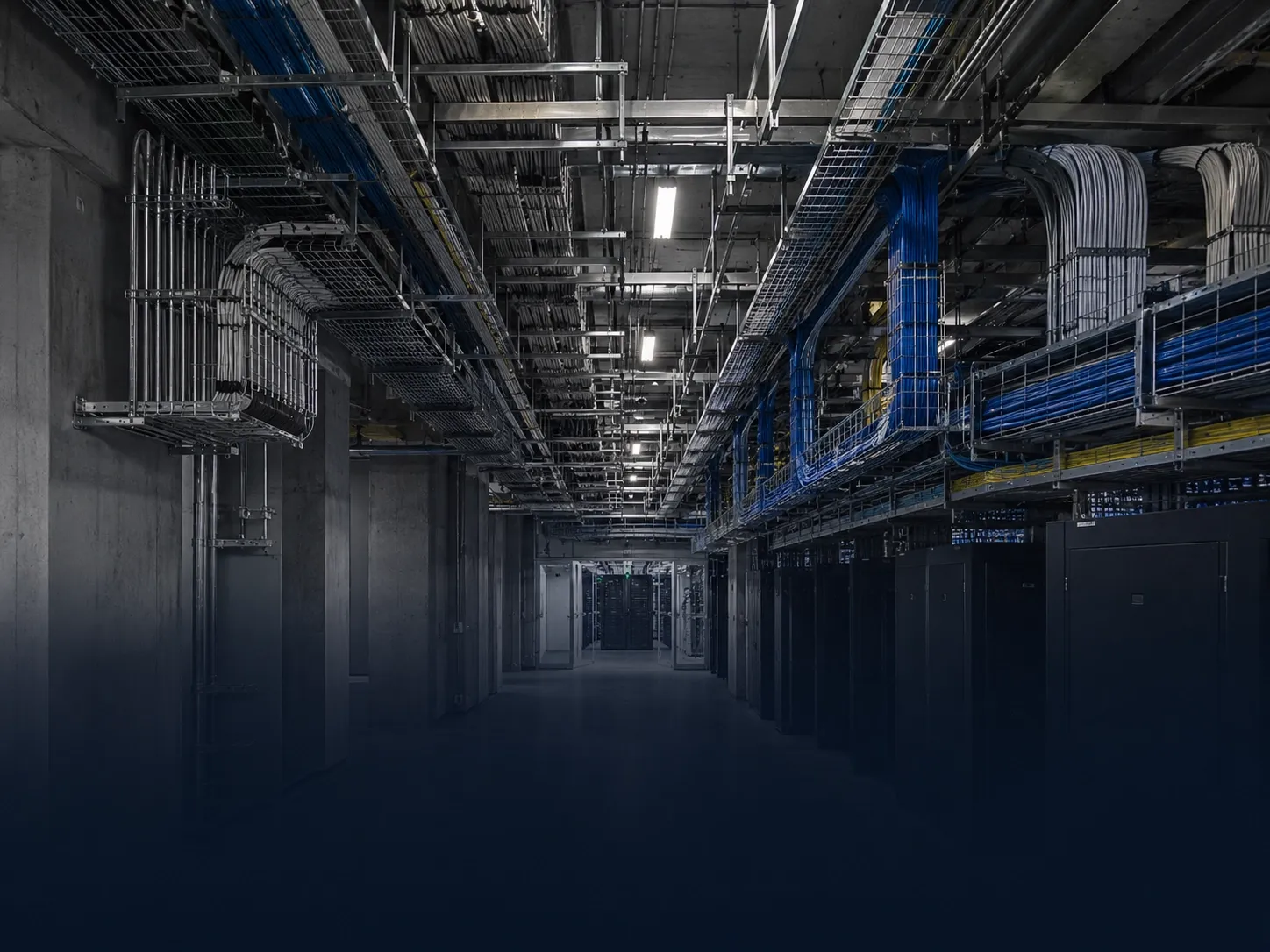
Structured cabling and containment across a project floor
Cable category (CAT6 vs CAT6A)

CAT6A adds 15–25% to material cost but prevents re-cabling for 10GbE

Outlet density & floor count

Higher outlet counts lower unit cost; more floors add vertical backbone cost

Containment requirement

Existing trays reduce cost; new containment routes add to it

Occupied building

Phased or out-of-hours delivery increases labour cost by 20–40%

Testing depth

Channel testing (required for TIA-568-D compliance) adds time but is not optional

Documentation depth

Editable as-built drawings take more time than a summary handover sheet

Standard exclusions(not included in a cabling quote)
Active network equipment
Fire-rated penetration sealing
Civil works
Third-party software licences
Annual maintenance contract (AMC)
Design fees (where billed separately)
Process

How a structured cabling project is delivered

Every project follows five phases in sequence. No phase begins until the previous one is complete and documented.

01

Site survey & design

Your project starts with a physical site survey. We review floor plans, confirm MDF and IDF locations, map cable routes, and produce a cable schedule.

No material ordered until the cable schedule is approved.
02

Containment installation

Cable trays, conduits, and ladder racks are installed before any cable is pulled.

Fire-rated routes identified and priced at design stage.
03

Cabling installation

Horizontal cables are pulled from each outlet back to the IDF. Backbone cables run from IDF to MDF. Every cable is labelled at both ends.

No termination left unlabelled at the end of any day.
04

Channel testing

Every outlet is tested at channel level using a Fluke DSX-8000 or equivalent calibrated instrument.

Failing channels remediated before handover begins.
05

Handover & documentation

Handover is not signed until editable as-built drawings, the full test report, cable schedule, and warranty registration are produced and accepted.

Not signed off until every document is accepted.
Key comparison

CAT6, CAT6A or fiber backbone: which is right for your building?

The cable category you choose today is permanent for 15 to 20 years.

Compare options
Select a category
Max speed at 100m
1GbE (10GbE to 55m only)
10GbE at 100m
100GbE+
PoE support
Up to 60W (PoE+)
Up to 90W (PoE++)
Not for endpoints
Cost per outlet
Lower
15–25% higher than CAT6
Higher upfront
Re-cabling risk
High if 10GbE needed within 5 years
Low
Low
Best for
Short-term fit-outs, 1GbE environments
10GbE to desktop, WiFi 6E, long-term buildings
Backbone runs, inter-floor, data centres

For any building you plan to occupy for more than five years, CAT6A is the more defensible choice.

Cross-service

What other building systems depend on your cabling

Your structured cabling is the physical layer most other building systems travel on.

Enterprise wireless

WiFi 6 / 6E APs need CAT6A and PoE++ at 90W.

View ICT services

IP CCTV & access control

IP cameras and access readers run on the same cabling infrastructure.

View security solutions

Building management systems

BMS controllers connect over Ethernet using BACnet (ASHRAE 135).

View BMS services

OT / IT network separation

OT segments must be physically separated or logically isolated at the switch layer.

View ICT services
Relevant industriesHealthcareHospitalityData centres
FAQs

Frequently asked questions

The questions about structured cabling services asked before going to tender.

For a single-floor commercial fit-out at 200 to 400 outlets, installation typically runs three to five weeks from design sign-off.

It depends on your horizontal run lengths and your IT team's bandwidth plan for the next five to seven years.

All structured cabling we design and install is specified to TIA-568-D (2018) and ISO/IEC 11801:2017 (3rd edition).

A complete handover package includes four named deliverables: editable as-built drawings, the full Fluke DSX channel test report, the patch panel and cable schedule, and warranty registration confirmation.

As early as possible. The most expensive cabling problems are caused by containment routes fixed before the cable schedule existed.

Usually because they exclude something. The most common omissions are: channel testing replaced with link testing only, and a summary handover sheet instead of editable as-built drawings.

Honest fit

When we are not the right choice

We will tell you directly when your project is not the right fit.

Your tender is evaluated on lowest price only

We do not remove channel testing or documentation to match a lower price.

Your project is a single-floor office under 50 outlets

A local low-voltage contractor will deliver it faster and at a lower cost.

Your building has a preferred-vendor list we are not on

If your procurement requires an approved-vendor arrangement and we are not on that list, we cannot proceed.

You're a good fit if…

Your project is a commercial building, hospital, hotel, data centre, or campus facility where structured cabling is part of a larger ICT or multi-system scope.

Book a cabling assessment

A scope to test proposals against before you go to tender

A cabling assessment gives you a cable schedule, a containment route review, and an indicative budget range.

A certified cabling engineer contacts you not a sales representative
Response within one business day
Indicative cable schedule and budget range in writing within five business days
No obligation if we are not the right fit, we will tell you directly

Tell us about your project

Response within one business day. No obligation.