

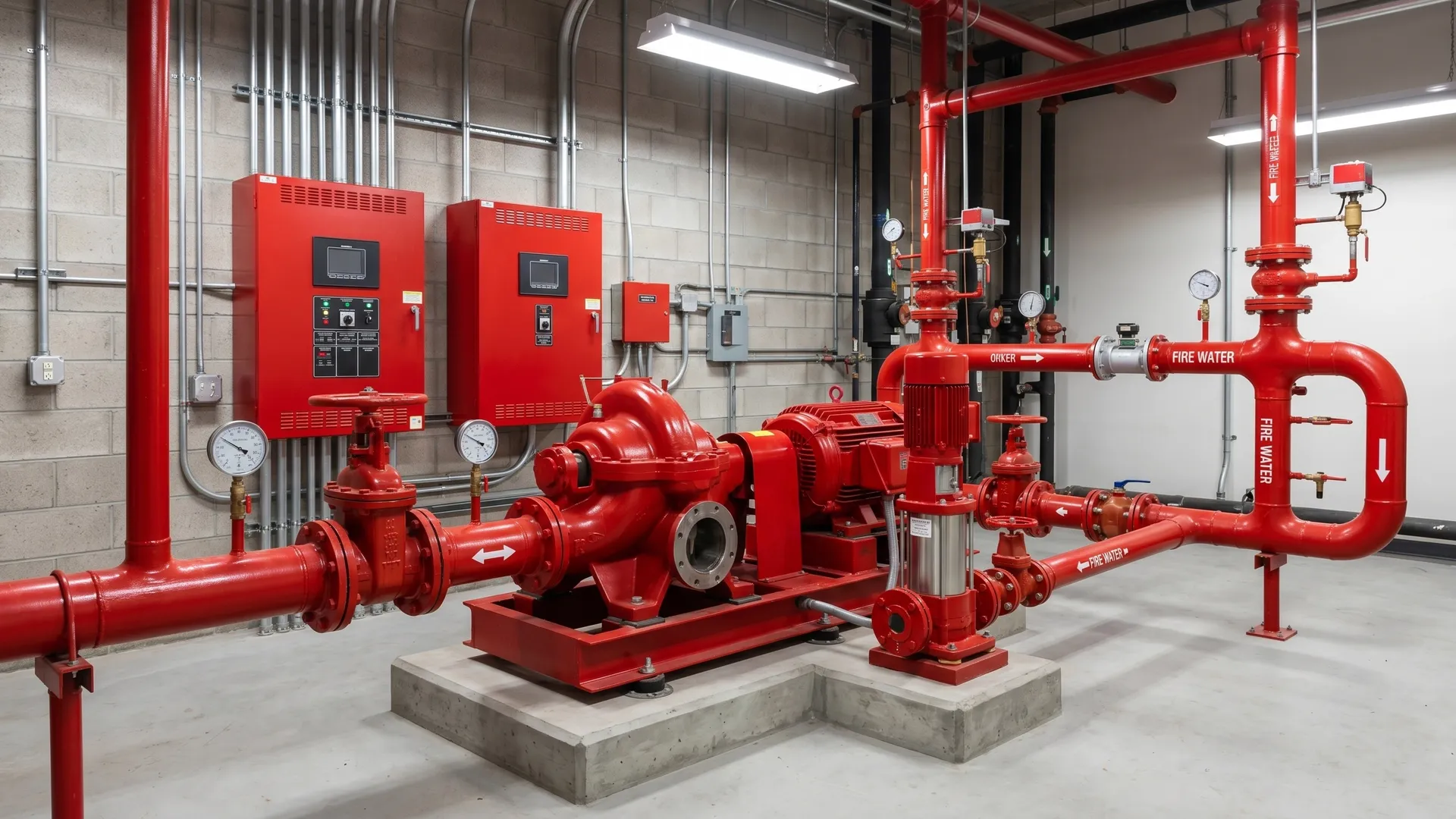
What is included in a fire fighting system?
A fire fighting system is the active side of fire protection: the pumps, pipework, valves and outlets that put water or suppressant onto a fire. It is separate from detection, which senses the fire and raises the alarm. You need both, and you need them designed to work together. The six elements below make up most commercial and industrial fire fighting systems.

Hydrant and hose reel systems
Landing valves, wet risers and hose reels give the fire service and trained staff a charged water supply on every floor. In a high-rise building, the riser design and the pressure at the topmost outlet decide whether the system passes inspection.
Automatic sprinkler systems
Sprinklers detect and fight fire at the same time, controlling it before the brigade arrives. The right sprinkler for your fire fighting system depends on occupancy hazard class, ceiling height and whether areas are wet, dry or pre-action.
Fire pump room and water supply
The pump set, jockey pump, controllers and tank are the heart of the system. Size them wrong and every outlet downstream underperforms, which is the most common reason a building fire fighting system fails its flow test.
Foam suppression systems
Where flammable liquids are stored or handled, water alone spreads the fire. Foam systems blanket fuel surfaces and are specified for fuel stores, generator rooms and parts of oil and gas facilities.
Water mist systems
Water mist controls fire using a fraction of the water a sprinkler uses, which limits water damage. It suits machinery spaces, heritage areas and rooms where flooding the floor is not acceptable.
Extinguishers and fire hose cabinets
Portable extinguishers and cabinet-housed hoses give occupants a first-response option for a small fire. They are matched to the fire risk in each area, not placed to a generic count.
Every element above is sized from one hydraulic calculation and one coordinated set of drawings. When the pump, pipework and outlets come from one design, the numbers agree at the test. Split the scope across suppliers and the pressures stop matching on inspection day.
Where fire fighting systems fail, and how we prevent it
Four failures that show up at the test or the inspection, not on the drawing. Each one is preventable at design stage.
What a compliant fire fighting system specification includes
Your specification is where compliance is won or lost. The table below shows the standards each part of your fire fighting system is designed and tested to, and the evidence you receive at handover. Editions matter here, because an inspector checks the code in force today, not the version from a decade ago. The governing edition is set by your local fire authority and confirmed per project. Where you protect a data centre, server room or another space that water can damage, the right answer may be a gaseous or water mist solution designed under our fire suppression scope rather than sprinklers.
What drives the cost of a fire fighting system up or down
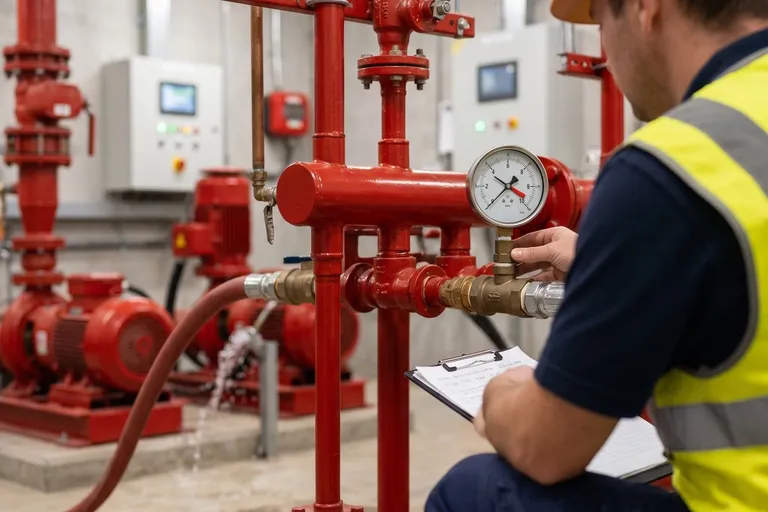
We do not publish fixed prices, because two buildings the same size can differ in cost by a wide margin once these six factors are set. Each one is decided at design, not on site, so getting them right early protects your budget. A fire safety assessment gives you an indicative range for your scope.

Which fire fighting approach fits your building?
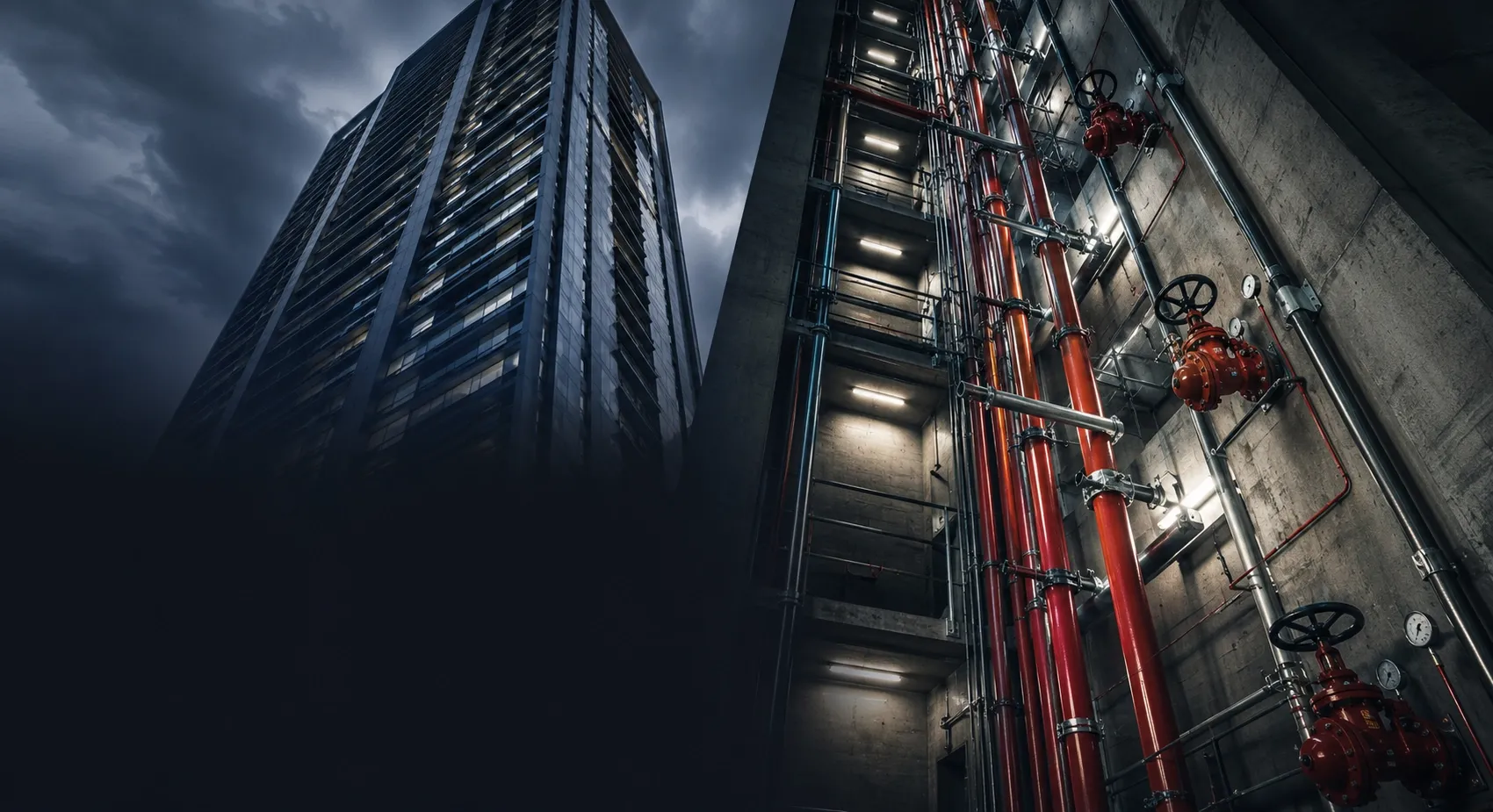
Most buildings need a combination, but the backbone you choose changes cost, code position and how much water damage you risk. Here is how the three main approaches compare.
In practice your building fire fighting system combines these: sprinklers as the backbone, hydrants and hose reels for the brigade, and a water mist or gaseous solution where water would destroy what it is meant to protect. The real decision is not which one, but how each is sized for your hazard class and how they integrate with detection. That is the conversation we have at the assessment, before any number is fixed.
What your fire fighting system needs to connect to
A fire fighting system does not work alone. It has to talk to the systems that detect the fire and the systems that move people out. These are the four connections we design and test together.
Fire gas detection systems
Detection senses the fire and tells your pump to start, your sprinkler zone to report and your alarm to sound. The fire fighting system is only as fast as the signal that triggers it.
View fire gas detection systemsFire suppression systems
Where water would damage what it protects, a gaseous or water mist solution takes over. We design the boundary between sprinklers and suppression so neither leaves a gap.
View fire suppression systemsBuilding management system
Your BMS monitors pump status, tank level and valve position, so a fault shows on a screen before it shows at an inspection. Live monitoring is what keeps the system audit-ready between services.
View BMS servicesStructured cabling and access control
Fire-rated cable carries the signals that survive a fire, and door release on alarm depends on a tested interface. We specify the cable and prove the release before handover.
View structured cablingFire fighting system questions buyers ask
The questions buyers ask about fire fighting systems before going to tender.
When we are the right choice, and when we are not
We will tell you directly when your project is not the right fit. These are the three situations where you should look elsewhere.
You are buying purely on lowest price
We will lose to a contractor who leaves the standby pump, the civil works or the witnessed testing out of the number. Those are the parts that fail first in a real fire, and we will not cut them to win a bid. A proposal without them is a different scope, not a cheaper one.
You need a one-off refill or a single hose reel service
A local maintenance firm will serve a standalone extinguisher refill or a minor repair faster and cheaper than we will. We are built for designed, integrated systems, not single call-outs. If that is what you need, we will say so at the first conversation.
You want a signature to pass inspection without fixing the design
We will not certify a fire fighting system we have not verified. If an existing system has the wrong pump or missing test records, we will tell you what it actually needs, even when that is not what you hoped to hear.
You're a good fit if…
Your project is a commercial, industrial, healthcare or high-rise building that has to pass a fire authority inspection and stay protected for its whole life, where you value a tested, documented handover over the lowest line on a bid sheet, and where the fire fighting system has to integrate with detection, BMS and access control.
A fire fighting scope you can test every proposal against
Book a fire safety assessment and a fire systems engineer will walk your building, confirm your hazard class and water supply, and give you a scoped, costed plan. You can then hold every contractor proposal against the same standard, instead of comparing numbers that quietly cover different work.
Tell us about your project
Response within one business day. No obligation.
Related resources
Life safety systems overview
How fire fighting fits the full life safety scope: detection, suppression and evacuation across your facility.
View life safety systemsFire gas detection systems
The detection side that triggers your fire fighting system: addressable fire alarm, VESDA and fixed gas detection.
View fire gas detection