

What a fire and gas detection system includes
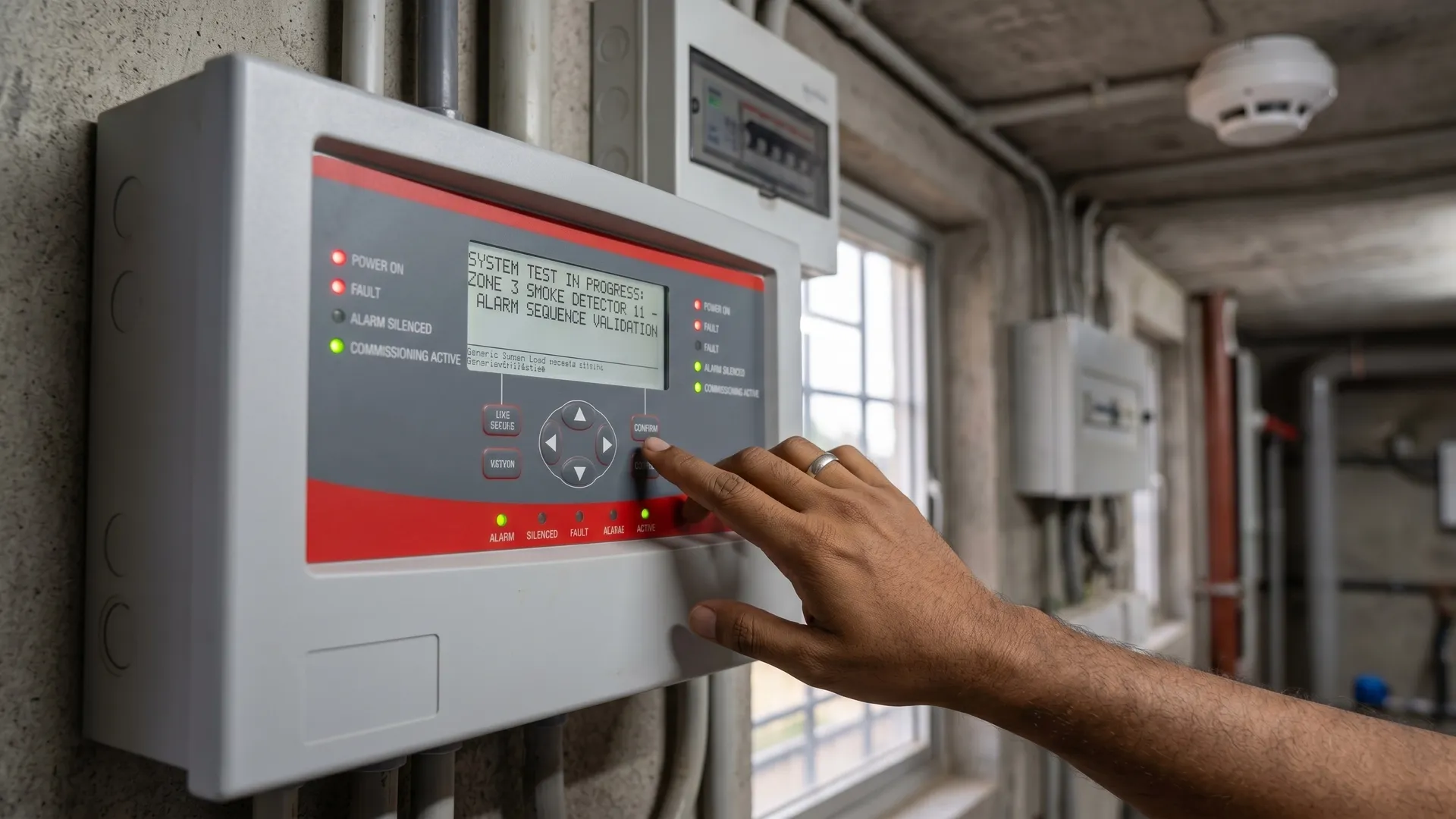
A fire and gas detection system is the practice of designing, wiring and configuring detection so it catches a real threat early and tells the right systems to act, instead of mounting detectors and hoping they sound when it matters. A complete detection scope covers the hazard survey and zoning, the detectors themselves, the addressable panel and its cause-and-effect logic, fixed gas detection where flammable or toxic gas is present, and all configuration and documentation from design through handover.
Detection risk survey & zoning
Hazard-by-hazard survey of what can burn or leak, with a detection zone and device schedule per area.
Addressable fire alarm detection
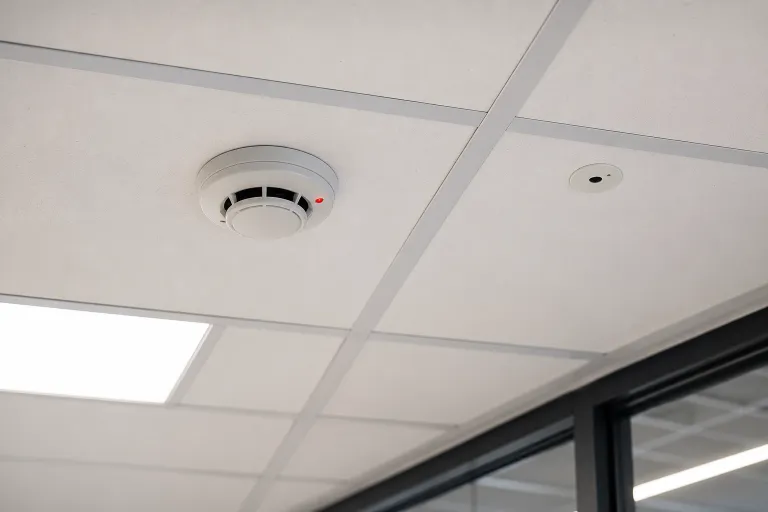
Smoke, heat and multi-criteria detectors addressed individually, so the panel names the exact device in alarm.
Aspirating smoke detection (VESDA)
Air sampled continuously through a pipe network for very early warning in high-value or high-airflow spaces.
Flame & special-hazard detection
UV/IR flame detectors and linear heat detection for spaces where point smoke detectors cannot respond in time.
Fixed gas detection
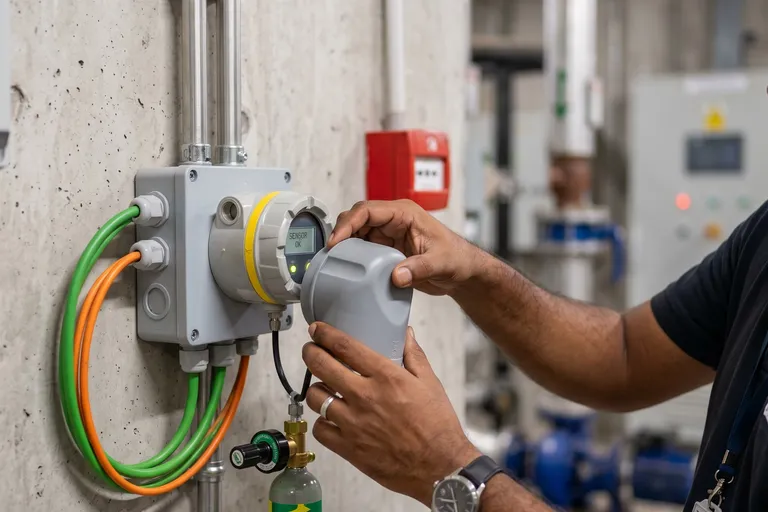
Catalytic, infrared and electrochemical detectors for flammable, toxic and oxygen-depletion risks, calibrated to the gases present.
Panel, cause-and-effect & handover
Addressable panel programming, the cause-and-effect matrix, as-built drawings and operator training.
The detection layout, device schedule and cause-and-effect matrix are agreed and approved before any detector or panel is ordered. Nothing is procured until the design is confirmed.
What goes wrong when detectors are bought instead of a system
Four failures that appear after installation, not before. Each one is preventable at design stage.
Technical specification
Fire and gas detection at Yakkaservices is designed to the fire it must catch and the environment it sits in. Detector type, siting and sensitivity are selected per zone, not bought as one model for the whole building. Detection is wired on fire-rated cable, programmed into an addressable panel, and integrated with the systems that act on an alarm. Before handover, every detection point and every cause-and-effect output is tested and witnessed, and the results recorded in the handover package. The standards below are the baseline; your subject-matter expert confirms the device and panel editions for your project.
What affects the cost of a fire and gas detection system
The cost of a fire and gas detection system varies with the number of zones and detection points, the detector types each space needs, and how much the system has to do when it alarms. A flammable-gas plant room with flame detection and a programmed shutdown costs far more per area than an office floor of point smoke detectors, even for the same footprint. We do not publish fixed prices, because the right number depends on your building, your hazards and your code path. A detection assessment gives you an indicative range for your scope.

Conventional, addressable or aspirating: which detection suits each space?
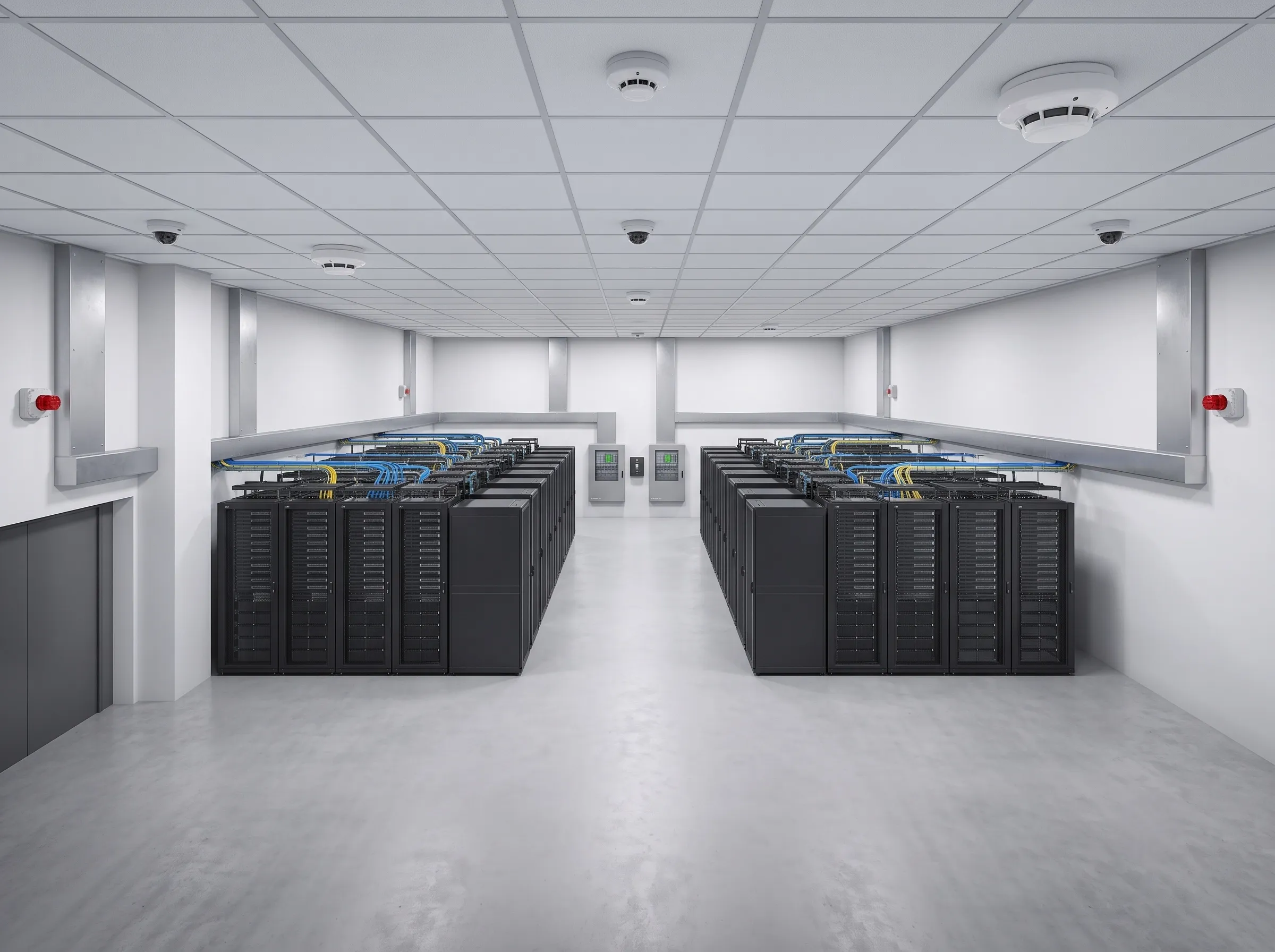
The detection approach you choose for a space decides how early you are warned, how precisely you find the source, and how often the panel cries wolf. Picking detection from a catalogue, without matching it to the environment and the fire you expect, is the most common reason a system either misses an early fire or nuisance-trips for years.
For most commercial, healthcare and public buildings, an addressable system is the defensible choice. It names the device in alarm, finds faults fast, and resists nuisance trips with multi-criteria detectors. Where you need warning before smoke is visible, in a data centre, archive or high atrium, aspirating detection earns its higher cost. Conventional detection suits small, simple buildings where zone-level location is enough. Gas detection is selected separately, by the gases each space can release.
What a fire and gas detection system connects to in your building
Detection rarely acts alone. It tells the building what to do when it senses a fire or a gas release: stop the fans, drop the doors, recall the lifts, release suppression and speak to the people inside. Leaving these links out of scope creates coordination gaps during installation and finger-pointing after an event.
Fire fighting & suppression
Detection is what releases a suppression system at the right time, in the right zone. Designed together, the cause-and-effect between detection and release is proven before handover, not assumed.
View fire suppressionBuilding management system
On alarm, detection tells the BMS to shut down or control fans, manage smoke and dampers, and bring the building to a safe state. Decide which events cross over at design stage.
View BMS servicesELV: access control & lifts
A fire signal must release locked doors on escape routes and recall lifts to a safe floor. This belongs in the detection cause-and-effect, tested with the access control and lift systems.
View ELV systemsVoice evacuation & public address
Detection should trigger clear voice messages, not just a bell, so people know what to do and where to go. Voice evacuation is integrated and tested with the detection system.
View AV solutionsFrequently asked questions
The questions buyers ask about fire and gas detection before going to tender.
When we are not the right choice
We will tell you directly when your project is not the right fit. These are the three situations where you should look elsewhere.
You need a few domestic alarms or a single small room
A local fire alarm installer will fit a handful of detectors in a small unit faster and at a lower cost than we will. We focus on detection systems that span a building, integrate with suppression, BMS and access control, and have to be tested, documented and serviceable for years. If your project is a single small space, we will say so at the first conversation.
Your tender is scored on lowest price only
If the scope leaves out the hazard survey, the cause-and-effect matrix or the witnessed testing, we will not win that tender, and we will not strip those steps to match a lower number. A proposal without them is a different scope, not a cheaper one. Detection that is never cause-and-effect tested is the cheap line item that fails on the day it matters.
You want detectors supplied only, with installation by others
If you have selected your detectors and only need them delivered, you do not need an integrator. We earn our place where detection is surveyed, designed, installed, cause-and-effect tested, integrated and handed over documented. For a supply-only order, that is cost you do not need.
You're a good fit if…
Your project is an industrial, commercial, healthcare or public building where fire and gas detection is part of a larger life safety and ELV scope, where detection has to trigger smoke control, suppression, lifts, doors and voice evacuation reliably, and where the system must pass inspection and stay documented and serviceable for years.
A detection scope you can test every proposal against
A fire and gas detection assessment gives you a detection zone plan, a draft cause-and-effect matrix, and an indicative budget range for your specific site, so procurement compares proposals that cover the same work.
Tell us about your project
Response within one business day. No obligation.
Related resources
Life safety systems overview
How fire and gas detection fits the full life safety scope: fire fighting, suppression and evacuation across your facility.
View life safety systemsHow much does a fire alarm system cost?
A guide to the cost drivers, exclusions and budget ranges by building type, hazard and market.
Coming soon