
Specialized Systems · ELV Systems

Specialized ELV systems designed, integrated, and documented for the building that depends on them

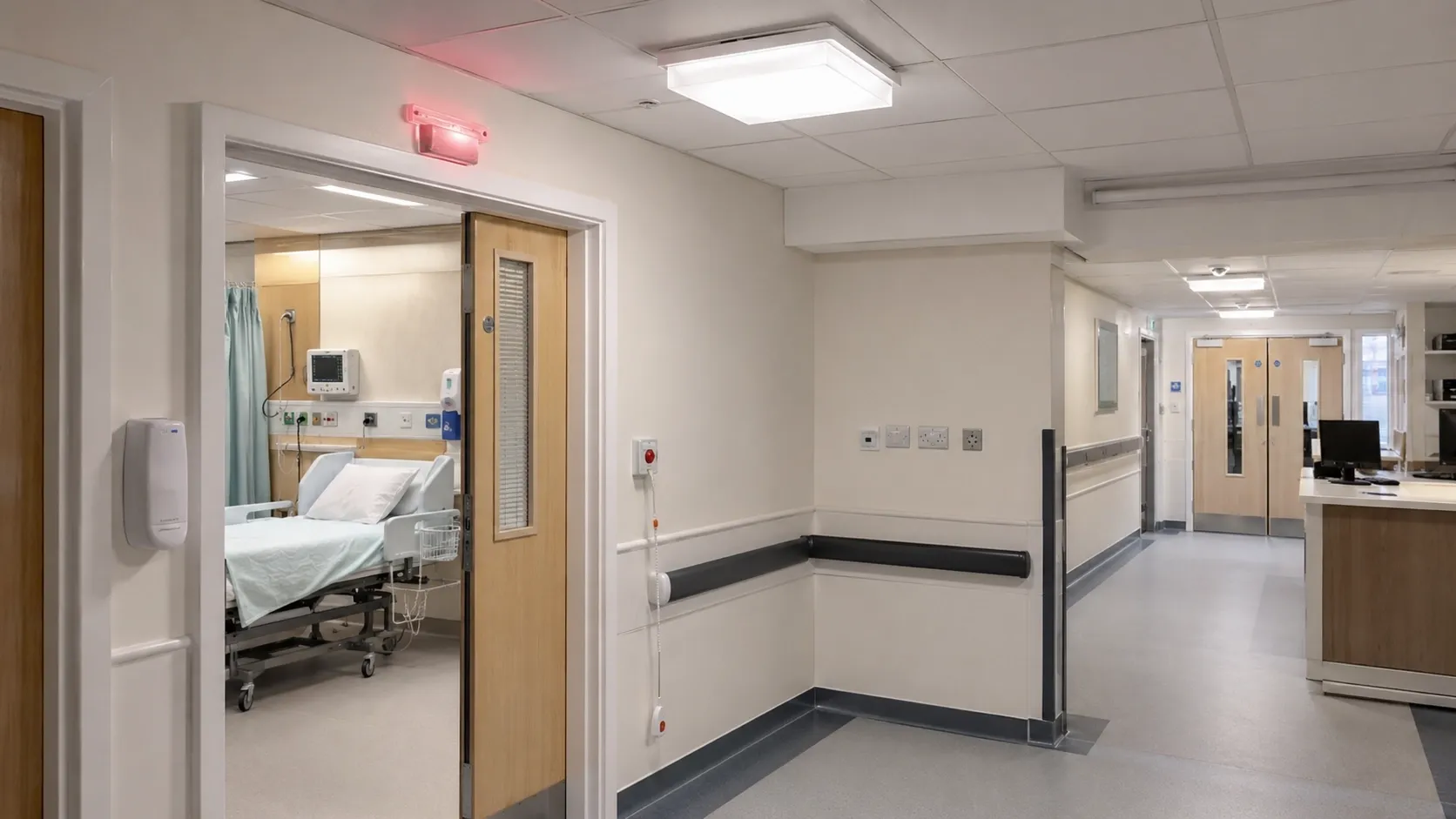
Specialized ELV systems in a hospital ward with nurse call and emergency lighting
6
specialized ELV systems designed, integrated and documented as one scope

Facility-specific systems, integrated with your fire alarm and structured cabling, tested before you sign.

If you are fitting out a hospital, hotel, school or commercial building, the specialized ELV systems are often the ones added last and tested least. A nurse call, hotel key card, school call bell, master clock, disabled toilet alarm or central battery system only earns its place if it works the day you open and keeps working after. Each one runs on the same structured cabling as your network, and most have to talk to your fire alarm. When you design and integrate these ELV systems from the start and document them at handover, they do the job your facility depends on.

Integrated with fire alarmStandards-based designDocumented at handover
ELV systems overview
A qualified ELV engineer replies within one business day, not a sales rep.
What it is

What specialized ELV systems include

Specialized ELV systems are the facility-specific extra-low-voltage systems that sit outside your core network, surveillance and access control, yet decide whether a hospital, hotel or campus actually runs. They are extra-low-voltage (ELV) because they operate at safe, low voltages and carry signals rather than power. A complete specialized systems scope covers the design, supply, installation, integration and documentation of each system you need, from a site survey through a tested handover.

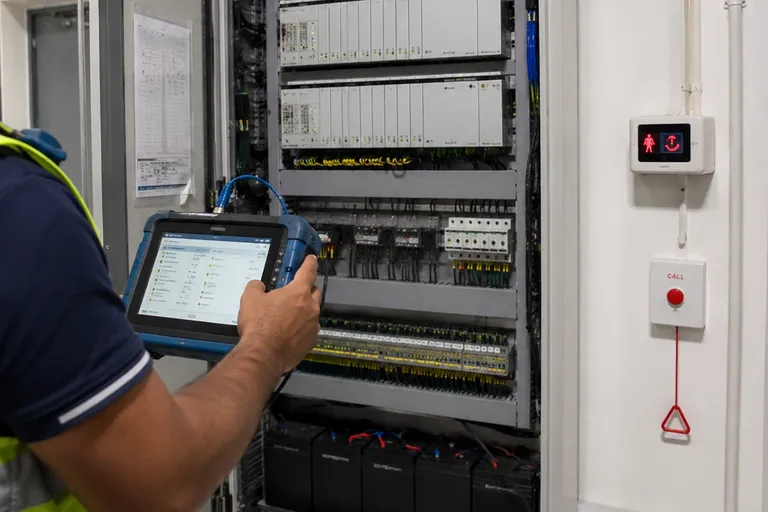
Nurse call controller, master clock and central battery panel in an ELV comms room

Nurse call system

Patient-to-nurse calling with bedside and toilet pull-cords, zoned to your ward layout.

Hotel key card system

Room access by card or mobile, with energy-saving room control and a clear audit trail.

School call bell system

Scheduled bells and announcements across a campus, programmable by timetable and zone.

Master clock system

One synchronised time source for clocks, attendance, CCTV and access logs across the site.

Disabled toilet alarm

Accessible-toilet emergency call with a pull-cord, indicator and reset, to the relevant accessibility code.

Central battery system

A single monitored battery source for emergency lighting, tested and logged for compliance.

Which systems you actually need is decided from a site survey and your facility type, then agreed before any device is ordered. Nothing is procured until the design is confirmed.

Risks

What goes wrong when specialized systems are left to the end

Four failures that appear after installation, not before. Each is preventable at design stage.

Risk 01

Specified late, with no cabling or containment reserved

When specialized systems are added after the main ELV design is fixed, no one reserved the cabling routes, containment or power for them. The nurse call head-ends, clock controller or battery cabinet then fight for space that is already full. We have arrived to install a central battery system in a room with no spare wall, no spare breaker and no containment back to the corridors it has to light.

Last
in the programme is where these systems are usually added, after the space is gone.
Prevention

List every specialized system in the ELV design brief at the start, so cabling, containment and power are reserved before the layout is frozen.

Specification

Technical specification

Specialized ELV systems at Yakkaservices are designed to the standard that governs each one, not to a single house specification. Emergency lighting from a central battery system follows the relevant emergency-lighting standard for your market. Systems that must react to a fire signal are interfaced to the fire alarm and tested to NFPA 72 (2022), BS 5839-1 or EN 54 as applicable. Every system runs on structured cabling designed to TIA-568-D (2018) and ISO/IEC 11801:2017, and a master clock distributes one synchronised time source so attendance, CCTV and access logs agree. Before handover, each system is tested against its design and the results are recorded in the handover package.
Structured cabling
TIA-568-D (2018) and ISO/IEC 11801:2017 (3rd ed.) for all signal cabling
Fire alarm interface
Cause-and-effect to NFPA 72 (2022), BS 5839-1 or EN 54, as applicable to your market
Emergency lighting / central battery
Designed to the relevant emergency-lighting standard; autonomy sized to escape-route duration
Time synchronisation
Master clock distributing NTP or PTP to clocks, attendance, CCTV and access systems
Accessibility
Disabled-toilet alarm to the local accessibility code: pull-cord, over-door indicator, reset
System integration
Fire alarm · structured cabling · access control · BMS event monitoring where required
Testing method
Each system tested against its design; fire cause-and-effect witnessed before handover
Handover documentation
Editable as-built drawings · device schedule · test records · maintenance log · operator training
Warranty
Extended manufacturer warranty activated at certified handover
Engineer testing a central battery system and nurse call before handover
As-built drawings, device schedule and test records included as standard.
Cost factors

What affects the cost of specialized ELV systems

The cost of specialized ELV systems varies with which systems you need, the size and zoning of your building, the duration and autonomy each system has to provide, how deeply they integrate with the fire alarm and BMS, and whether you are wiring a new building or retrofitting an occupied one. A nurse call zoned across three wards with toilet pull-cords on every cubicle costs far more than a single-ward system, even with the same bed count.
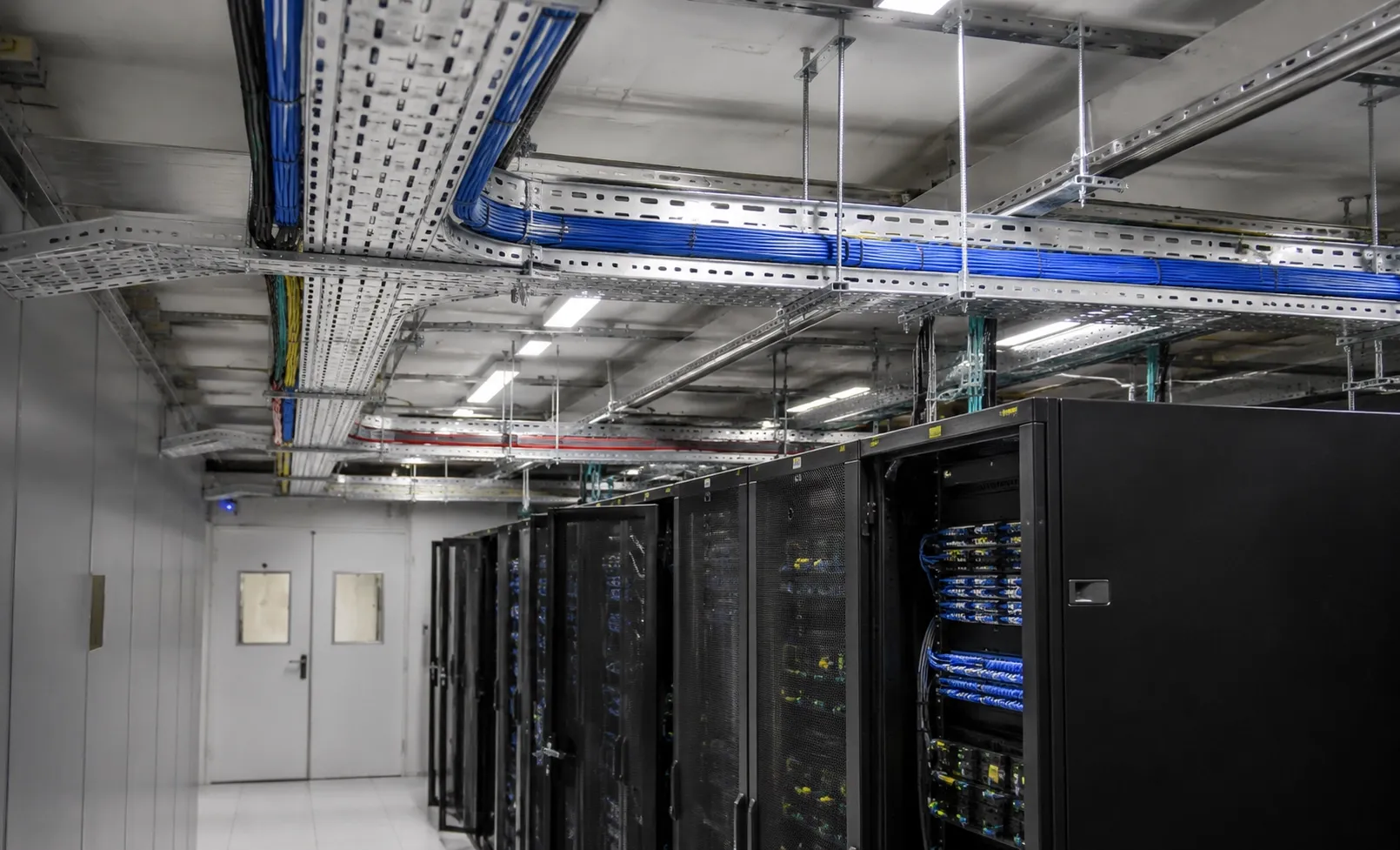
Containment and cabling installed for specialized ELV systems
Which systems and how many

Each system you add brings its own controller, devices and cabling; a single system costs far less than six.

Building size and zoning

More floors, wards or zones add controllers, loops and cabling, even at the same headcount.

Duration and autonomy

Longer battery autonomy and higher device counts multiply the hardware you have to buy and house.

Integration depth

Standalone systems are cheapest; fire-alarm cause-and-effect and BMS links add design and commissioning time.

Retrofit versus new build

An occupied building adds phased or out-of-hours work and cabling through finished ceilings.

Documentation and testing depth

Witnessed testing and editable as-built records take more time than a summary handover sheet.

Standard exclusions(not included in a specialized systems quote)
Builder’s work, civil works and dedicated rooms
Main electrical supply and distribution boards
Door hardware (locks, maglocks, closers) where by others
Third-party software and cloud subscriptions
Furniture, fixtures and equipment by others
Annual maintenance contract (AMC)
Process

How a specialized systems project is delivered

Every project follows five phases in sequence. No phase begins until the previous one is complete and documented. Nothing is procured until the design is approved. Nothing is handed over until each system has been tested.

01

Site survey & system design

Your project starts with a site survey and your facility type. We confirm which specialized systems you need, where the controllers and devices go, and produce a device schedule, a zoning plan and an integration matrix.

No device ordered until the device schedule and zoning plan are approved.
02

Cabling, containment & power

Containment, structured cabling and dedicated power for each system are installed to the design. Battery cabinets, head-ends and controller rooms are coordinated with your MEP team before work starts.

Cabling routes and power confirmed before any controller is mounted.
03

Device installation

Call points, pull-cords, readers, clocks, indicators and battery units are mounted and terminated to the device schedule. Every device is labelled at both ends to match the schedule.

Every device labelled to the schedule before configuration begins.
04

Configuration & integration testing

Each system is configured, then the integration is tested: a nurse call reaches the right ward, a fire signal proves the emergency lighting, and the master clock holds every system to one time.

Fire cause-and-effect tested and witnessed before handover begins.
05

Handover & documentation

Handover is not signed until editable as-built drawings, the device schedule, the test records, the maintenance log and operator training are produced, reviewed and accepted.

Not signed off until every document and the operator training are accepted.
Key comparison

How to procure your specialized systems: separate, integrated or deferred?

How you buy these systems shapes whether they work together and whether anyone is accountable when they do not. Splitting them across separate contracts or pushing them to the fit-out is the most common reason they arrive late, untested and undocumented.

Compare options
Select a category
Fire-alarm cause-and-effect
Each contractor assumes another owns it
Designed and tested as one scope
Often missed; tested late or never
Cabling & containment
Coordinated between contracts on site
Reserved in the ELV design up front
Routed through finished ceilings
Accountability
Split; gaps appear at commissioning
One accountable scope
Unclear once the base contractor has left
Documentation
Separate or missing per system
One as-built set and test record
Rarely produced
Cost & variations
Lower bids, more variation orders
Coordinated cost, fewer surprises
Premium for retrofit and rework
Best for
A single dominant system
Buildings needing several systems together
Late scope changes only

For a building that needs more than one specialized system, an integrated ELV scope is the more defensible choice: cabling reserved up front, fire-alarm cause-and-effect tested once, and one set of documentation at handover. A single dominant system can sit with one specialist. Deferring to the fit-out almost always costs more in retrofit and rework than it saves.

Cross-service

What specialized ELV systems connect to in your building

Specialized systems rarely stand alone. They ride on your cabling, react to your fire alarm, and feed events to the systems that run the building. Leaving these links out of scope creates coordination gaps during installation and finger-pointing after handover.

Structured cabling

Nurse call, clocks, readers and alarms run on structured cabling with the right routes and power. Specify them outside the cabling scope and a second, uncoordinated cabling job usually follows as a variation.

View structured cabling

Life safety & fire alarm

A central battery system proves emergency lighting on alarm, and access-controlled doors must release on a fire signal. That cause-and-effect is a design decision, not a site improvisation.

View life safety systems

Building management system

A nurse call, key card or battery system can raise an alarm or report status to the BMS, so faults reach the facilities team. Decide which events cross over at design stage.

View BMS services

Security & access control

Hotel key card systems share readers and credentials with access control, and a master clock keeps their logs to the same time as CCTV. Coordinate them so the audit trail lines up.

View security solutions
Relevant industriesHealthcareHospitalityEducation
FAQs

Frequently asked questions

The questions buyers ask about specialized ELV systems before going to tender.

Specialized ELV systems are the facility-specific extra-low-voltage systems beyond your core network, surveillance and access control. On this page that means nurse call, hotel key card, school call bell, master clock, disabled toilet alarm and central battery systems. They are grouped together because each is specific to a building type, each runs on your structured cabling, and most have to interface with your fire alarm. They are usually specified late, which is exactly why they go wrong.

It depends on your facility type and the codes that apply to it. A hospital usually needs nurse call, disabled toilet alarms and a central battery system. A hotel needs key card and often a central battery system. A school needs a call bell and a master clock. The fastest way to know is a site survey against your floor plans and local requirements, which is what a systems assessment gives you before you go to tender.

Several of them do. A central battery system has to prove emergency lighting when the fire alarm activates, and access-controlled or key-card doors on escape routes must release on a fire signal. Where that link exists, we design the cause-and-effect and test it, witnessed, before handover. We do not assume it works; we prove it. Treating this as a site detail rather than a design decision is the most common failure on these projects.

Yes, though a retrofit costs more than the same system in a new build. Cabling has to be routed through finished ceilings, and disruptive work is phased or done out of hours. We survey the occupied areas first, agree the phasing with your team, and confirm where cabling and containment can run before quoting. Expect a higher cost per device than a new-build installation, and confirm it against a site survey.

You receive editable as-built drawings, the device schedule, the test records, the maintenance log and operator training. These are named contract deliverables, not extras. With them, your facilities team can run the system, pass the annual emergency-lighting or nurse-call test, and expand it later. Anything beyond this list should be named in your contract before work begins.

Honest fit

When we are not the right choice

We will tell you directly when your project is not the right fit. These are the situations where you should look elsewhere.

You need a single standalone system, supply only

If you need one system, off the shelf, with your own electrician to install it, a product supplier will serve you faster and cheaper than we will. We earn our place where several systems must work together and integrate with the fire alarm. For a single supply-only item, that is coordination you are paying for and do not need.

Your tender is scored on lowest price only

If the scope leaves out the site survey, fire-alarm cause-and-effect testing or documented handover, we will not win that tender, and we will not strip those steps to match a lower number. A proposal without them is a different scope, not a cheaper one.

You want a consumer-grade kit you manage yourself

If you have chosen an off-the-shelf hotel lock or bell kit and plan to self-install and self-manage, you do not need an integrator. We add value where systems must satisfy a code, interface with life safety, and hand over documented. For a plug-and-play setup, that is cost you do not need.

You're a good fit if…

Your project is a hospital, hotel, school, campus or commercial building where you need more than one specialized system, where they must integrate with your fire alarm and structured cabling, and where the systems have to pass inspection and stay maintainable for years after handover.

Book a systems assessment

A specialized systems scope you can test every proposal against

A systems assessment gives you a list of the specialized systems your building needs, a device and zoning plan, and an indicative budget range for your specific site, so procurement compares proposals that cover the same work.

A qualified ELV engineer contacts you, not a sales representative
Response within one business day
Indicative systems list, zoning plan and budget range in writing within five business days of the site visit
No obligation. If we are not the right fit, we will tell you directly

Tell us about your project

Response within one business day. No obligation.